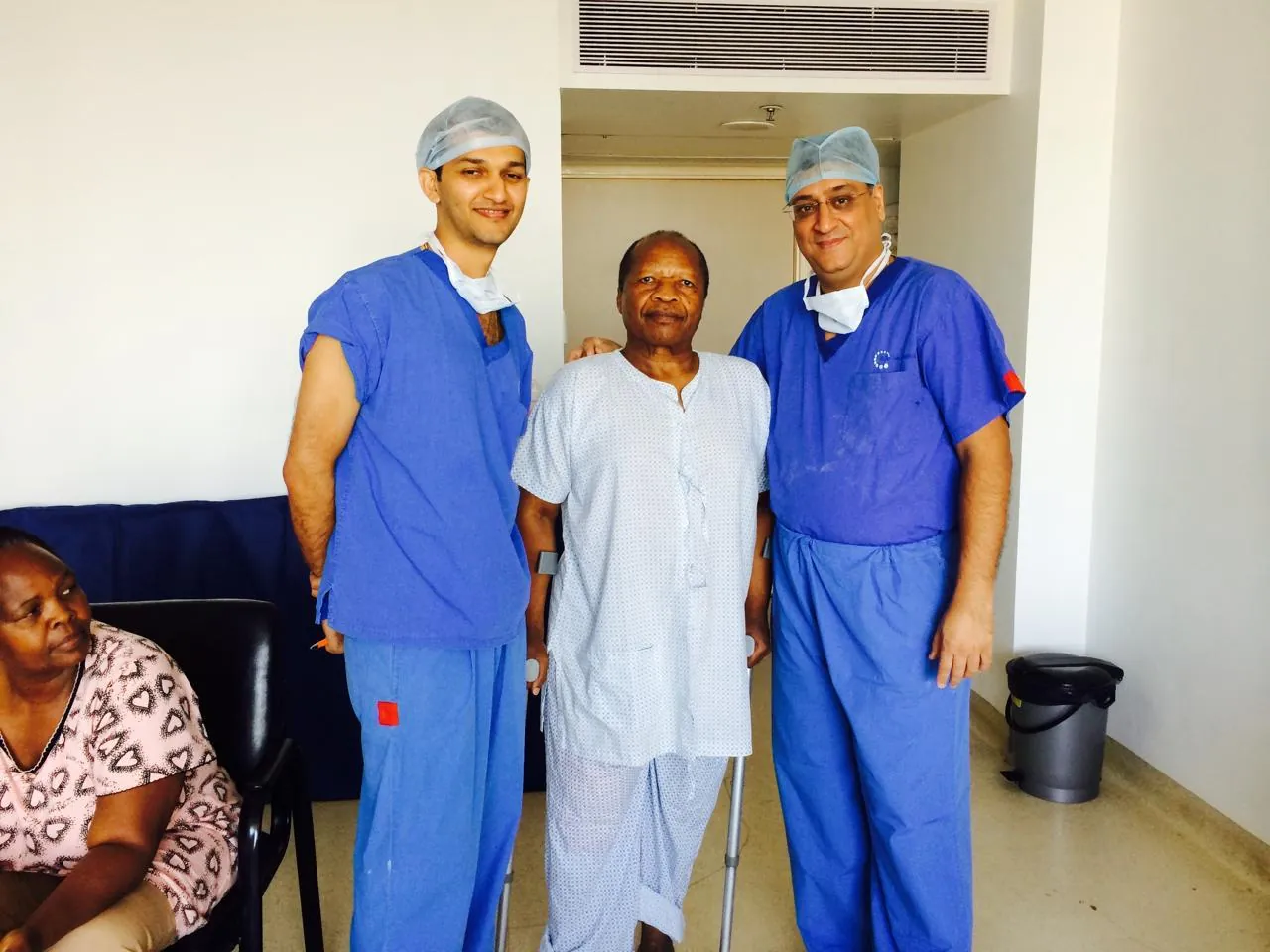
Most patients walk with a frame the day after knee replacement surgery, leave hospital in four to five days, walk with a stick by the end of the second week, drive again at four to six weeks, and reach full recovery between three and six months. The joint continues to improve for a full twelve months after the operation.
Recovery is a process with recognisable milestones rather than a single finish line. Knowing what those milestones are — and roughly when to expect them — is one of the strongest predictors of whether a patient stays motivated through rehabilitation. What follows is the timeline Dr. Joshi's patients at Kokilaben Dhirubhai Ambani Hospital are given.
Day 1: standing and taking your first steps
You will be helped to stand and take your first steps with a walking frame on the day after surgery — in many cases on the evening of surgery itself. This is deliberate and it is safe. Early mobilisation reduces the risk of blood clots, pneumonia and muscle wasting, and patients who mobilise on day one consistently recover faster.
Pain is managed with a multimodal protocol rather than a single strong drug, which controls discomfort while keeping you alert enough to participate in physiotherapy. Ice is used to control swelling. Ankle pump exercises begin immediately — they are the single most important thing you can do in the first days to prevent deep vein thrombosis.
Days 2 to 5: hospital stay
The average hospital stay after an uncomplicated total knee replacement is four to five days; robotic-assisted patients often go home a little sooner. During this period the focus is on pain control, wound care, clot prevention and beginning to bend the knee.
- Walking distance increases daily, progressing from frame to elbow crutches or a stick.
- Knee flexion typically reaches 70–90° before discharge.
- You will practise stairs with the physiotherapist before going home.
- Compression stockings and blood-thinning medication continue as prescribed.
You go home when you can get in and out of bed independently, walk a safe distance with an aid, manage stairs, control pain on oral medication, and have a clean, dry wound. Meeting those criteria matters more than the number of days on the calendar.
Weeks 1 to 2: early recovery at home
This is the most demanding phase and the one patients underestimate. Swelling peaks, sleep is often disturbed, and progress feels slow. It is entirely normal.
Most patients are walking with a stick by day five to seven. Keep the wound dry until cleared. Continue ankle pumps hourly, quadriceps sets and heel slides. Elevate the leg and ice regularly — swelling control is what unlocks range of motion.
Weeks 3 to 6: active rehabilitation
Physiotherapy intensifies and this is where the working range of the knee is largely determined. Flexion should reach 90° by weeks four to six, and the aim is to keep pushing beyond it.
- Walking aid — most patients are off the stick indoors between weeks four and six.
- Stairs — climbing normally, one foot per step, usually returns around week four to six.
- Driving — typically four to six weeks for a right knee, and often sooner for a left knee with an automatic transmission. The published evidence sits behind that range: braking studies after knee replacement find reaction time back to pre-operative levels at around four weeks, while the force a patient can put through the brake pedal takes closer to six. The test is functional, not a date — you must be able to perform an emergency stop without hesitation and be off strong analgesia.
- Swimming and stationary cycling — introduced once the wound is fully healed, usually from week four.
- Desk work — many patients return part-time between weeks four and six.
These are general figures drawn from the published evidence, not a fixed protocol: clearance is judged case by case, and Dr. Joshi confirms it at your follow-up. Desk-based work is commonly resumed part-time from around four to six weeks. Work that involves prolonged standing, ladders, kneeling or heavy lifting usually takes appreciably longer — commonly around three months — and should be agreed with him rather than assumed. Check your motor insurer's position before you drive again, as some policies have their own requirements after surgery.
Months 3 to 6: returning to normal life
By three months most daily activities are comfortable — walking, stairs, shopping, social activities and travel. Residual swelling settles, the limp resolves, and strength continues to build. Patients needing deep flexion for floor sitting or prayer generally achieve it in this window with dedicated physiotherapy, particularly with a high-flex implant.
Air travel is usually cleared from around six weeks, with movement and hydration during the flight; long-haul travel is more comfortable from three months.
Six to twelve months: the final gains
The knee reaches its definitive function somewhere between nine and twelve months. Strength, confidence on uneven ground and endurance all continue improving well after the point most patients consider themselves recovered. Occasional warmth, mild swelling after a long day, and some numbness on the outer side of the scar are all normal and may persist for a year or more.
What slows recovery down
- Not doing the exercises. The single most common reason for a stiff knee at six months.
- Poorly controlled diabetes, which impairs wound healing and raises infection risk.
- Smoking, which measurably impairs bone and soft-tissue healing.
- Untreated swelling — a swollen knee will not bend well, so ice and elevation are not optional extras.
- Doing too much too soon, which provokes swelling and sets range of motion back.
Warning signs — call the team immediately
Sudden increase in wound redness, warmth or discharge · calf pain, swelling or redness, which may indicate a deep vein thrombosis · fever above 38.5 °C beyond day three · chest pain or shortness of breath · sudden severe pain or an inability to bear weight. None of these should be left until the next scheduled appointment.
The knee exercise programme sets out exactly what to do at each stage, and the patient guides hub covers preparation before surgery and long-term joint care.
Frequently Asked Questions
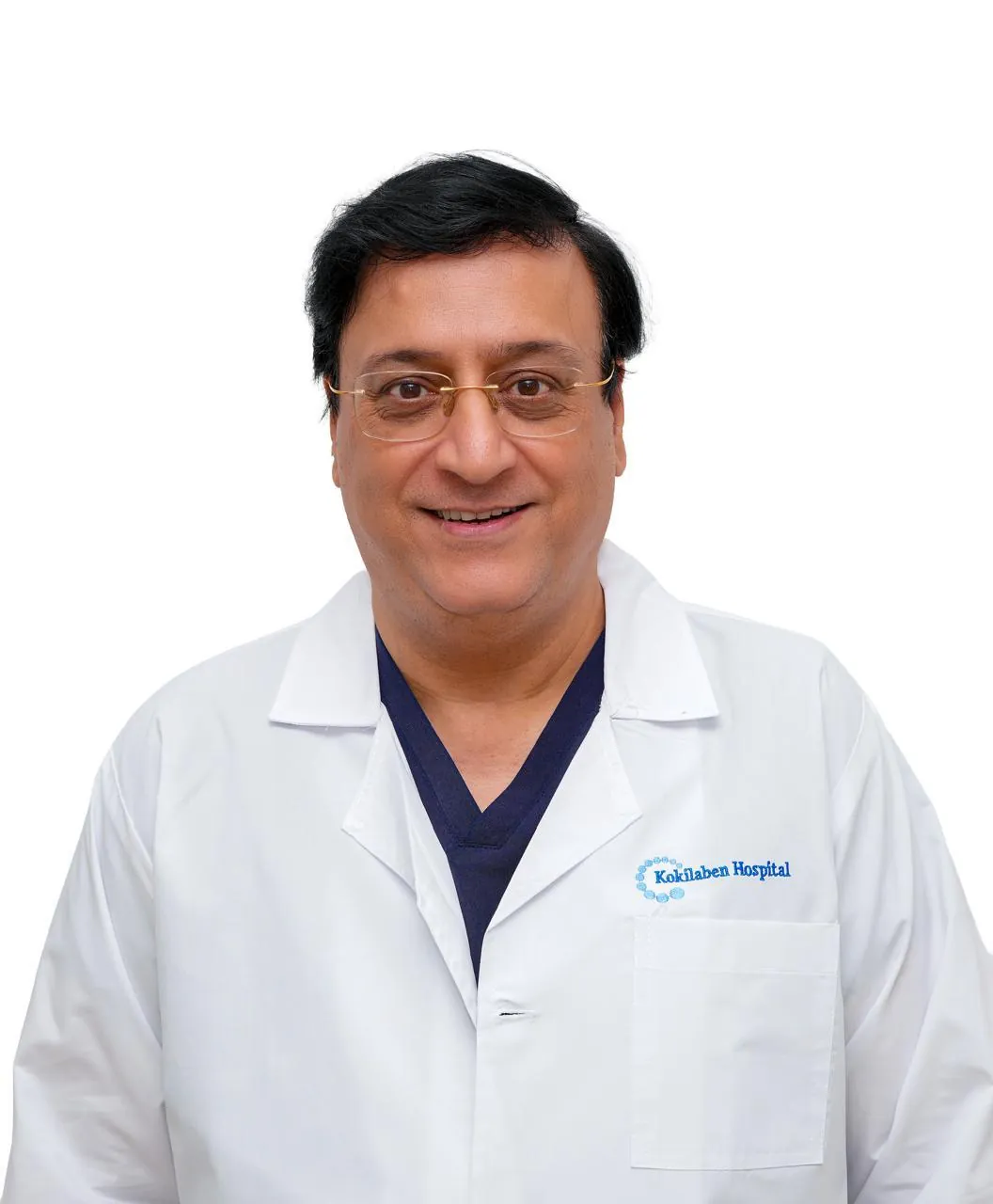
Consultant Orthopaedic & Joint Replacement Surgeon and lead of the Arthroplasty team at Kokilaben Dhirubhai Ambani Hospital, Mumbai. Twelve years of specialist training across five UK orthopaedic centres, with further fellowships in Canada, Italy, Singapore and the USA. More than 4,500 joint replacements performed.