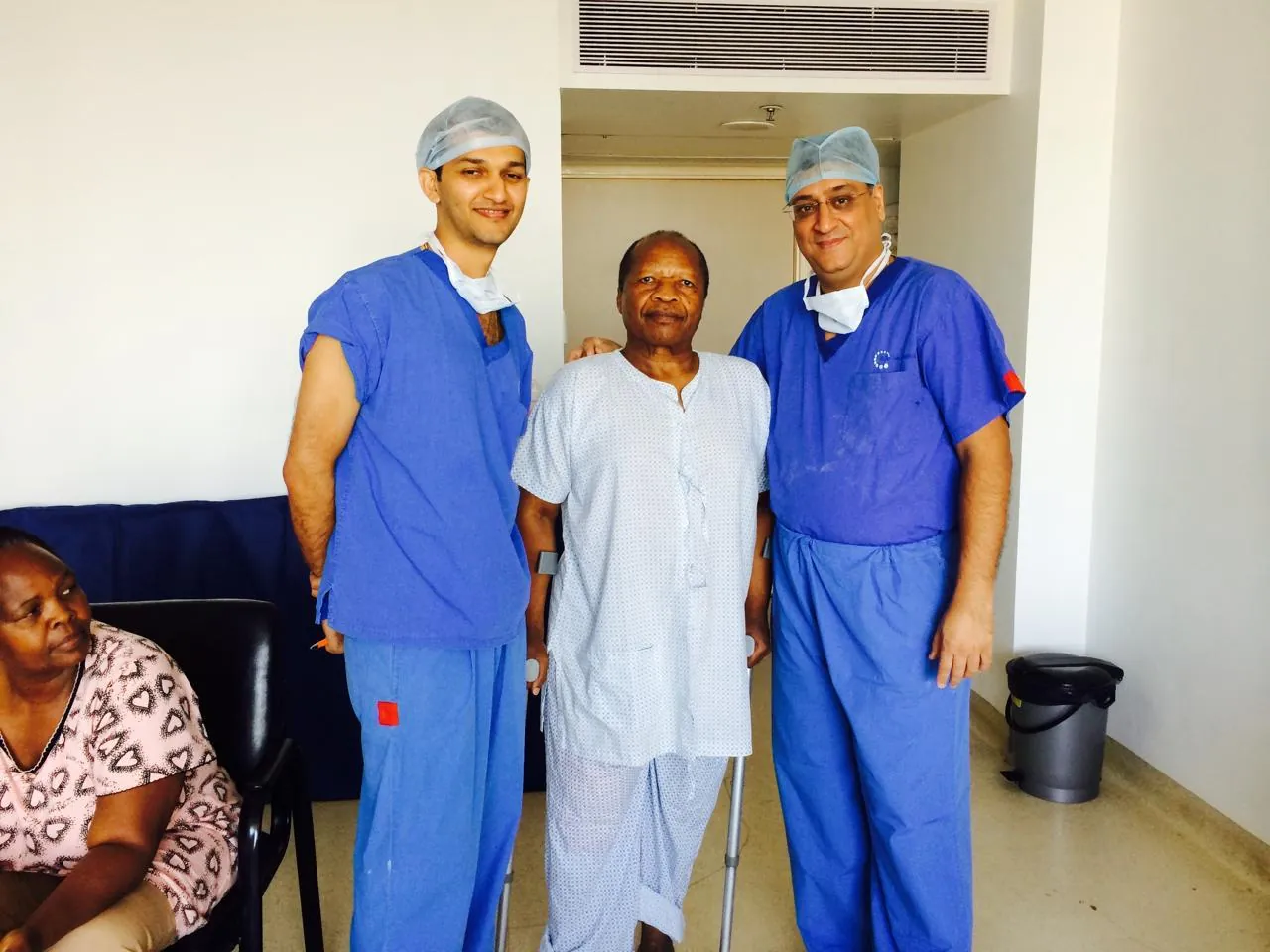
After a knee replacement, the surgery determines what is possible and the exercises determine what you actually get. Dr. Vinay S. Joshi's patients at Kokilaben Dhirubhai Ambani Hospital begin ankle pumps and quadriceps sets on day one, progress to heel slides and straight leg raises in week one, and add stationary cycling from weeks four to six.
A stiff knee at six months is almost always a rehabilitation problem rather than a surgical one. The window in which range of motion is won is measured in weeks, not months — which is why the programme below starts on the first day and why consistency matters more than intensity.
Some discomfort during exercise is expected and appropriate — around three or four out of ten. Sharp or severe pain is a signal to stop and contact the team. Never force a joint through extreme discomfort, and never skip a session because the previous one was uncomfortable.
Day 1 onwards: the two exercises that matter most
Ankle pumps
Pump the foot up and down, as though pressing a car accelerator, continuously for two to three minutes every hour while you are awake. This is the single most important exercise in the first days after surgery — it drives the calf muscle pump and is your principal defence against deep vein thrombosis. Begin the day of surgery and continue for at least six weeks.
Quadriceps sets (static quads)
Lie flat with the leg straight. Tighten the thigh muscle and press the back of the knee down into the bed. Hold for five seconds, then relax. Ten repetitions, three sets a day. This prevents the quadriceps wasting that follows any knee operation and re-establishes the muscle's ability to straighten the knee fully — full extension matters more to walking quality than deep flexion does.
Week 1: adding movement
Heel slides
Lying on your back, slide the heel towards the buttock, bending the knee as far as is comfortable. Hold five seconds and slide back. Ten to fifteen repetitions, several times a day. This is the exercise that directly buys knee flexion, and flexion is the milestone your progress is measured against.
Straight leg raises
Tighten the quadriceps to lock the knee straight, then lift the whole leg to 30–45°. Hold briefly and lower slowly under control. Three sets of ten. This strengthens the quadriceps without loading the joint surface. If the knee sags as you lift, the quadriceps is not yet strong enough — go back to quad sets and build up.
Seated knee bends
Sitting on the edge of a chair or bed, let the operated leg bend under gravity, then use the other foot behind the ankle to gently increase the bend. Hold at the point of stretch for ten seconds. This is often the most effective flexion exercise once the initial swelling settles.
Weeks 2 to 6: building strength and range
Knee extension stretch (the terminal extension work)
Sit with the heel propped on a stool and nothing supporting the knee, letting gravity straighten it. Ten minutes, two or three times a day. A knee that does not fully straighten produces a permanent limp and puts extra load on the hip and the other knee, so this is not optional.
Standing knee bends
Holding a support, bend the operated knee back, bringing the heel towards the buttock. Hold five seconds. Three sets of ten.
Mini squats
Holding a worktop, bend both knees to about 30–45° — a partial bend, not a full squat — keeping the weight through the heels. Three sets of ten. This builds functional strength for stairs and getting out of chairs.
Step-ups
Using the bottom step or a low block, step up leading with the operated leg, then step down leading with the other. Start with ten repetitions and build. This is the most direct preparation for climbing stairs normally.
Walking
Walking is rehabilitation, not a break from it. Build from short, frequent walks to twenty or thirty minutes by week four to six, on flat ground, using the prescribed aid until cleared to walk unaided.
Weeks 4 to 6: stationary cycling
Dr. Joshi recommends stationary cycling strongly. It improves flexion and builds quadriceps strength simultaneously, with almost no impact loading on the joint.
Start with the saddle high, which requires less knee bend, and simply rock the pedals back and forth if a full revolution is not yet possible. Once full revolutions come, cycle for ten minutes and build gradually. Lower the saddle a little each week to increase the bend required. Swimming and water walking can be introduced at the same stage, once the wound is fully healed.
Months 2 to 6: consolidation and deep flexion
By this stage the aim shifts from recovering range to consolidating strength, balance and endurance — and, for patients with a high-flex implant, to working towards deep flexion. Achieving cross-legged sitting or kneeling requires a dedicated, progressive stretching programme over three to six months; it does not happen spontaneously. See the high-flex knee guide for what is realistic.
- Resistance work for the quadriceps, hamstrings and hip abductors, progressed gradually.
- Balance and proprioception work — single-leg stance, then on an unstable surface.
- Progressive walking distance, including gentle gradients.
- Static cycling and swimming as the mainstay of cardiovascular fitness.
What to avoid
- Running and jogging on hard surfaces — repeated impact loading accelerates polyethylene wear.
- High-impact sport — football, squash, basketball and similar.
- Heavy weightlifting, particularly deep loaded squats and leg press to full flexion.
- Twisting on a planted foot.
- Kneeling directly on a hard floor in the early months, which is uncomfortable and can irritate the wound.
- Daily floor sitting or squatting. Occasional deep flexion after a high-flex knee is fine; as an everyday habit it shortens implant life.
- Pushing through sharp pain. Discomfort is expected; sharp pain is information.
After a high-flex knee replacement, sitting cross-legged and squatting are both achievable. Dr. Joshi’s advice is that they are done occasionally rather than as daily routine: repeated deep flexion loads the implant heavily and shortens the working life of the prosthesis. With a standard implant the question does not arise in the same way — a standard knee reaches around 110–120°, which is short of the roughly 130–150° that cross-legged sitting and squatting require.
When to stop and call the team
Pain is sharp, severe or sudden rather than a working discomfort · the knee becomes suddenly more swollen, hot or red · you develop calf pain or swelling · your range of motion goes backwards over consecutive days · the knee gives way or feels unstable. Losing flexion in the first six weeks is the situation most worth catching early, because it is far easier to treat then than later.
Frequently Asked Questions
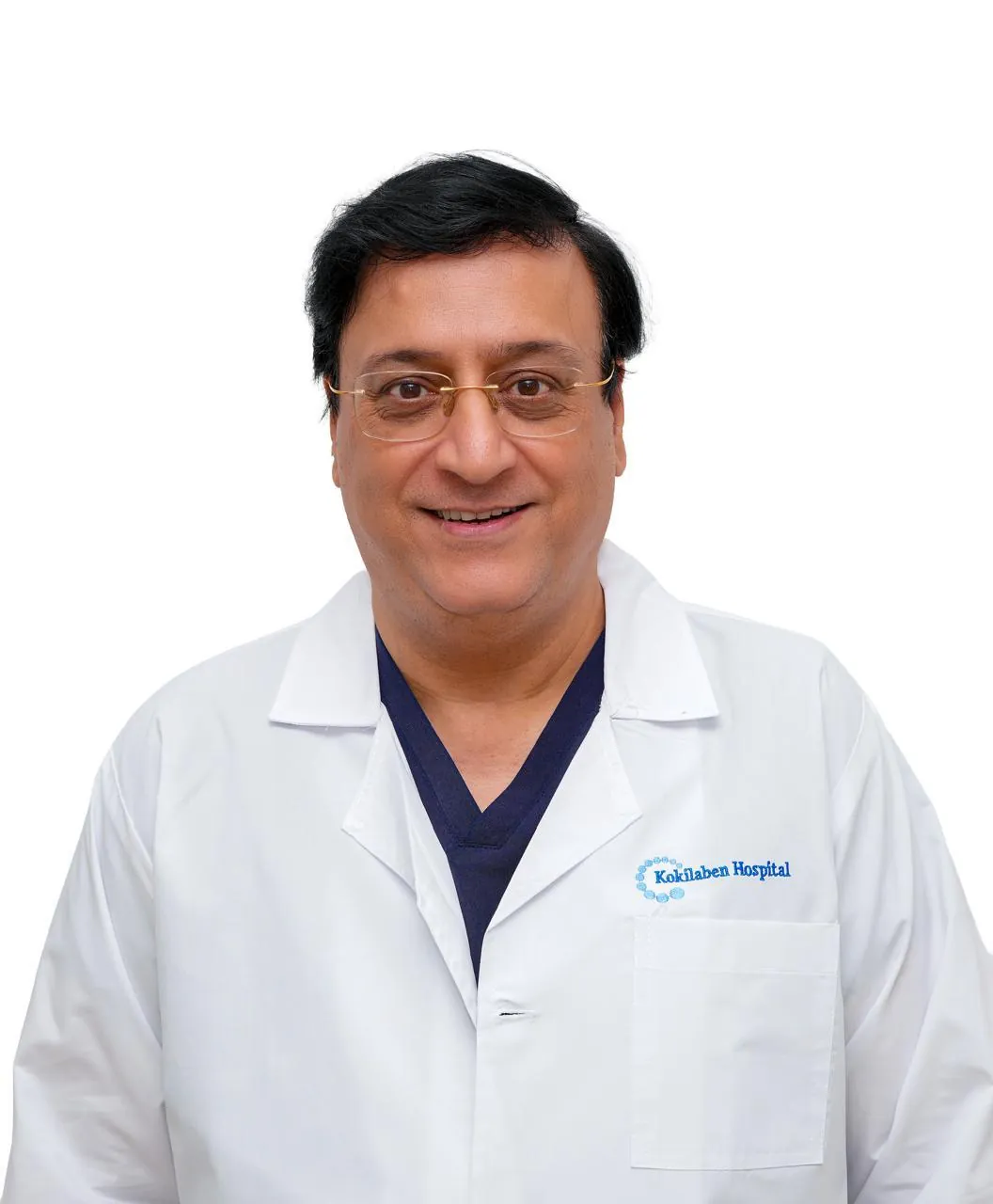
Consultant Orthopaedic & Joint Replacement Surgeon and lead of the Arthroplasty team at Kokilaben Dhirubhai Ambani Hospital, Mumbai. Twelve years of specialist training across five UK orthopaedic centres, with further fellowships in Canada, Italy, Singapore and the USA. More than 4,500 joint replacements performed.