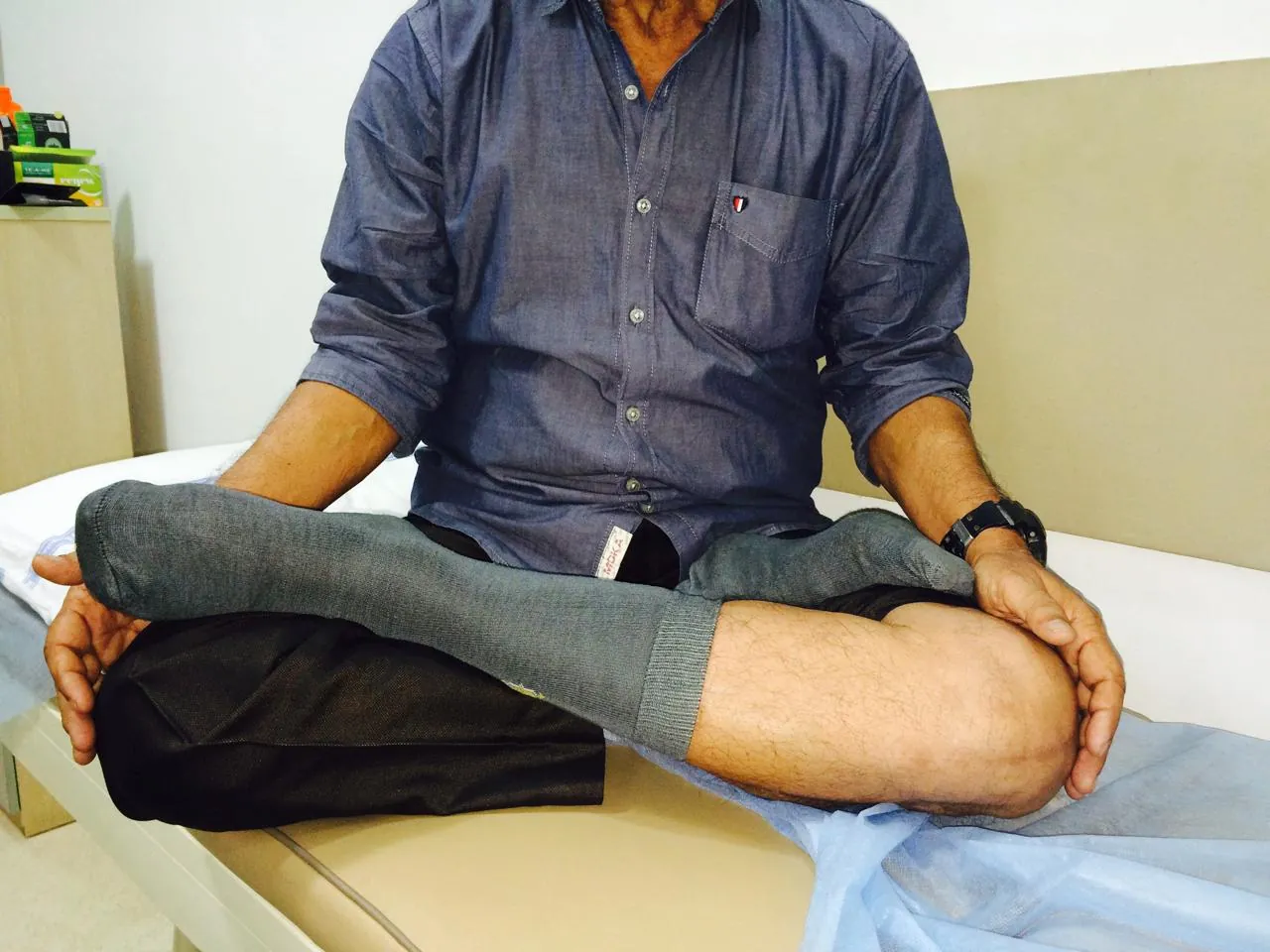
A high flex knee replacement is an implant system engineered to allow bending of roughly 150–155°, compared with 110–120° for a standard knee implant. Dr. Vinay S. Joshi uses high-flex systems at Kokilaben Dhirubhai Ambani Hospital for patients whose daily life, culture or religious practice requires deep knee flexion — sitting cross-legged, kneeling for prayer, squatting, or using a floor-level toilet.
This is one of the few areas of joint replacement where the right answer genuinely differs between a patient in Mumbai and a patient in Manchester. Implant design followed Western daily life, which is conducted almost entirely in chairs. A great many Indian patients need considerably more than that, and being told after surgery that you can never again sit on the floor with your family is a poor outcome even if the X-ray looks perfect.
How much bend does daily life actually need?
It is worth being concrete about the flexion different activities require, because it explains immediately why implant choice matters.
| Activity | Knee flexion required |
|---|---|
| Walking on the flat | ~65° |
| Climbing stairs | ~85–90° |
| Getting out of a low chair | ~95–105° |
| Cycling | ~110° |
| Kneeling upright | ~110–120° |
| Sitting cross-legged (sukhasana) | ~130–150° |
| Kneeling and sitting back on the heels (as in namaz) | ~150° |
| Full squat (as for a floor-level toilet) | ~150–165° |
A standard implant reaching 110–120° covers every activity in the top half of that table and none in the bottom half. That is the entire clinical argument for a high-flex system.
What makes a high-flex implant different
Deep flexion places unusual demands on a knee replacement. As the knee bends past about 120°, the contact area between the femoral component and the polyethylene insert shifts to the very back of the joint and the loads rise steeply. A standard component was never designed for that position, and forcing it there risks edge loading, accelerated wear and, at the extreme, the femoral component levering against the back of the polyethylene.
- Extended posterior condylar geometry — more articulating surface at the back of the femoral component, so contact is maintained rather than lost in deep flexion.
- A modified polyethylene insert shaped to accept the femoral component in that deep position and spread the load.
- Anterior flange design that accommodates the patella tracking at extreme flexion.
- Deeper posterior femoral resection as part of the surgical technique, so bone does not block the final degrees of bend.
The implant is only half of it
This is the point Dr. Joshi makes most firmly to patients, and it is where a high-flex result is most often lost. Fitting a high-flex implant does not by itself produce a high-flex knee. Three surgical elements have to be right as well.
Posterior capsule and osteophyte clearance
Bone spurs at the back of the femur and a tight posterior capsule mechanically block the last thirty degrees of flexion. Clearing them is a deliberate, meticulous part of the operation, not an afterthought.
Ligament balance through the whole arc
A knee balanced only in extension and mid-flexion can be uncomfortably tight in deep flexion. Balance has to be assessed across the full range. This is one of the specific advantages of robotic-assisted surgery, where the VELYS system measures medial and lateral ligament tension quantitatively throughout the arc of motion rather than relying on feel alone.
Restoring posterior condylar offset
If the back of the femoral component sits too far forward relative to the original anatomy, the femur impinges on the tibia early and deep flexion is lost regardless of implant design. Getting this right is a matter of surgical precision at the planning and cutting stage.
Even with the right implant and the right technique, deep flexion has to be worked for. Dr. Joshi's team runs a progressive stretching programme over three to six months. Most high-flex patients achieve cross-legged sitting and kneeling within four to six months of surgery — but it is earned in physiotherapy, not conferred in theatre.
Who is a good candidate?
The honest answer is: patients whose lives require it, who have the soft tissue and bone stock to support it, and who will do the rehabilitation. Dr. Joshi asks directly about lifestyle and religious practice at consultation, because patients frequently do not volunteer it — many assume floor sitting is simply lost after a knee replacement and never raise it.
- Patients who sit cross-legged for meals, prayer or family life.
- Patients who perform namaz, which requires kneeling and sitting back on the heels.
- Patients who practise yoga or floor-based exercise.
- Patients who use squat-style toilets, at home or when travelling.
- Patients whose work involves squatting or kneeling.
Pre-operative range of motion is the strongest single predictor of post-operative range. A patient who can already bend to 120° before surgery has a far better prospect of deep flexion afterwards than one who arrives at 80° with a long-stiff knee. Significant deformity, previous surgery, or a very stiff arthritic knee all reduce what is realistically achievable, and Dr. Joshi will say so plainly rather than promise an outcome the anatomy will not support.
Setting realistic expectations
Two things are worth saying clearly. First, a high-flex implant improves the ceiling of what is possible; it does not guarantee that you reach it. Second, deep flexion should be comfortable rather than forced — a knee that only reaches 150° by being pushed into pain is not a knee you will use that way in daily life.
After a high-flex knee replacement, sitting cross-legged and squatting are both achievable. Dr. Joshi’s advice is that they are done occasionally rather than as daily routine: repeated deep flexion loads the implant heavily and shortens the working life of the prosthesis. With a standard implant the question does not arise in the same way — a standard knee reaches around 110–120°, which is short of the roughly 130–150° that cross-legged sitting and squatting require.
High flex and robotic surgery together
These two technologies address different halves of the same problem. The high-flex implant provides the geometry that permits deep bend; robotic assistance provides the precision in bone preparation and the measured ligament balance that lets the knee actually use it. For a patient whose priority is returning to floor sitting, the combination is the strongest option Dr. Joshi can offer. The knee replacement page sets out the full range of implant systems available.
Frequently Asked Questions
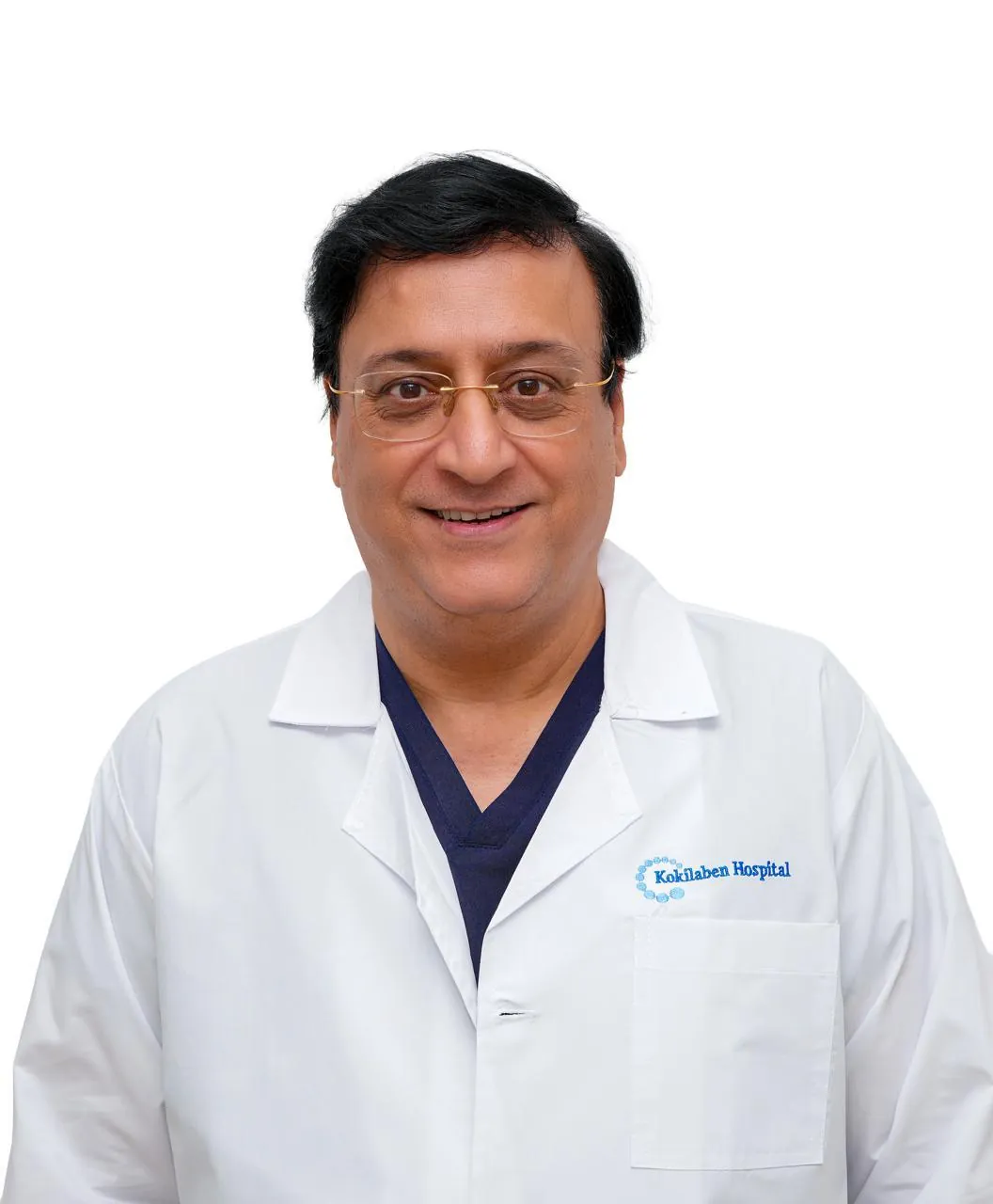
Consultant Orthopaedic & Joint Replacement Surgeon and lead of the Arthroplasty team at Kokilaben Dhirubhai Ambani Hospital, Mumbai. Twelve years of specialist training across five UK orthopaedic centres, with further fellowships in Canada, Italy, Singapore and the USA. More than 4,500 joint replacements performed.